
When Netflix dropped the first four episodes of Stranger Things Season 5 on November 26, 2025, fans didn’t just press play—they held their breath. After a 2.5-year wait since Season 4’s July 2022 finale, the long-anticipated conclusion to the Hawkins saga began not with a bang, but with a slow, uneasy crawl. The first two episodes, written and directed by The Duffer Brothers, felt like trying to remember your own childhood dream: vivid in places, frustratingly foggy in others. But by Episode 4, everything changed. What started as a sluggish return became a soaring farewell.
Four Episodes, One Long Wait
Volume 1 of Season 5 runs 4 hours and 30 minutes across four chapters, with Episode 1: "Chapter One: The Crawl" clocking in at 68 minutes. That’s nearly an hour of setup—characters reuniting, memories resurfacing, and the ever-present dread of the Upside Down creeping back into Hawkins, Indiana. But here’s the thing: Netflix didn’t just release a new season. It released a requiem. The show’s core cast—now in their early 20s—aren’t kids anymore. And neither are the viewers. That’s why the pacing stumble in Episodes 1 and 2 stings so much. As Brian Tallerico of RogerEbert.com noted, "There are... so many heated planning scenes in just four episodes," with roughly 100 minutes of actual plot stretched across 270 minutes of screen time. It’s not laziness—it’s nostalgia overload.The Duffer Brothers and the Ghost of Momentum
The Duffer Brothers, who’ve helmed every episode since the show’s 2016 debut, clearly felt the weight of closing their nine-year epic. They leaned hard into emotional callbacks: Eleven’s lingering trauma, Mike’s quiet leadership, Dustin’s nervous humor. But the script’s reliance on exposition—characters explaining what happened two years ago, again and again—felt like a safety net. The show used to trust its audience to remember. This time, it seemed unsure. The turning point came with Episode 3, directed by Frank Darabont, the Oscar-nominated mind behind The Shawshank Redemption. His episode, "Chapter Three: The Storm," wasn’t just better—it was a reset. He cut the chatter. He let silence speak. He focused on Max’s deteriorating mental state and Lucas’s desperate vigil at her bedside. The result? A 72-minute masterpiece of tension and restraint. "He centered everything again," Tallerico wrote. "After two episodes of wandering, Darabont gave us a compass."Music That Haunts, and the Sound of Fear
If the visuals stumbled early, the soundtrack didn’t. In Episode 2, as Cara Buono’s Mrs. Wheeler tries to shield her family from a Demogorgon in their Hawkins home, ABBA’s "Fernando" blares from a vintage stereo. The song, cheerful and bright in its original form, warps and distorts as the creature approaches—notes stretching like taffy, rhythm collapsing into static. It’s horrifying. Brilliant. And it’s not alone. Netflix’s sound team, led by composers Kyle Dixon and Michael Stein of Survive, layered Kate Bush’s "Running Up That Hill" into Max’s flashbacks. But this isn’t the 1985 hit you know. It’s manipulated—slowed, reversed, fractured—echoing her near-death experience in Season 4. Every time it plays, you feel the weight of her survival. It’s not just nostalgia. It’s trauma made audible.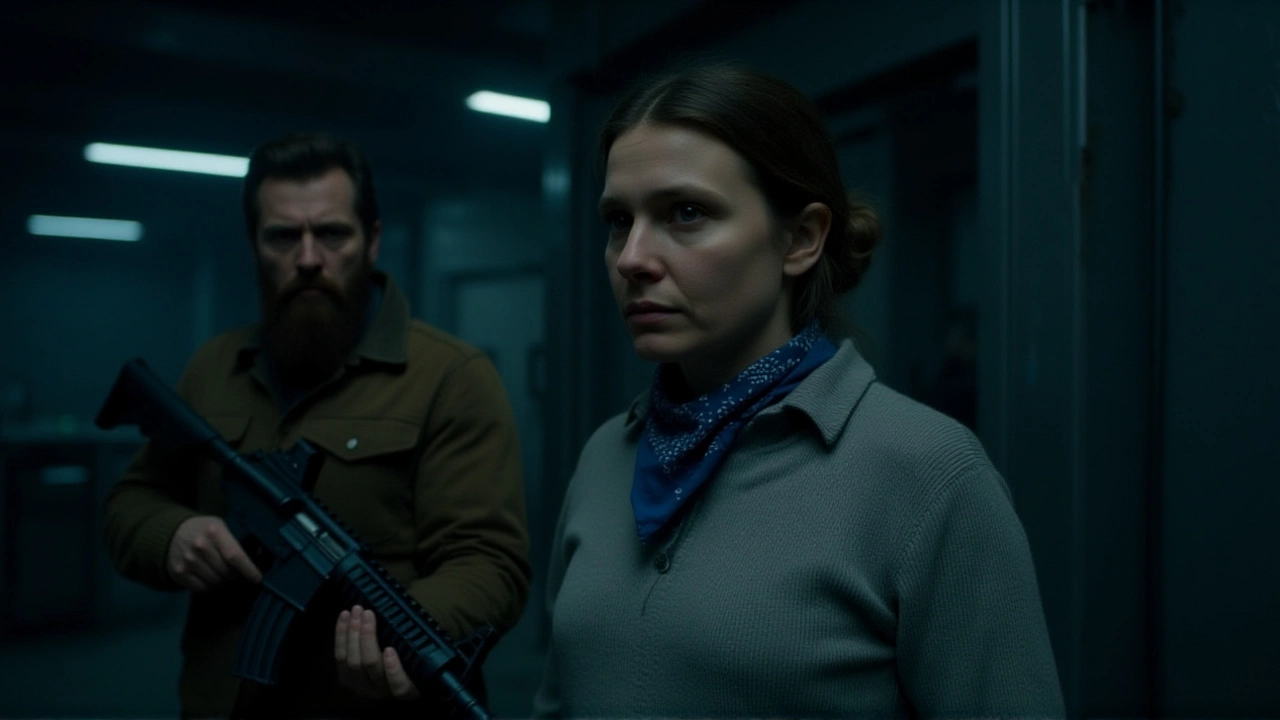
Episode 4: The Spectacle That Saves It
The finale, "Chapter Four: The Gate," is where Stranger Things proves it still knows how to awe. The Duffer Brothers returned to direct, and they brought everything: a collapsing Hawkins High, a psychic showdown between Eleven and the Mind Flayer, and visual effects so intricate they look like a CGI symphony. "Truly spectacular," Tallerico called them. The final sequence—Eleven’s hair floating in zero gravity as she channels every ounce of her power—isn’t just a climax. It’s a thesis. This isn’t a story about kids fighting monsters. It’s about adults choosing to face the darkness, even when they’re exhausted.What Comes Next? The Final 29 Days
Volume 2 arrives exactly 29 days later: December 25, 2025, in North and South America; December 26, 2025, everywhere else. That’s not a coincidence. It’s a gift. Christmas Eve. A day of quiet endings and new beginnings. The show’s creators know their audience. They know we’ve grown up with these characters. They know we’re ready for closure.
Why This Matters
Stranger Things didn’t just entertain. It defined a generation’s pop culture. From the VHS filters to the synthwave scores, it turned 1980s nostalgia into a global language. But Season 5, Volume 1 shows us something deeper: that endings aren’t about spectacle. They’re about letting go. The pacing issues? They’re the show’s last act of honesty. It’s tired. We’re tired. And yet, we’re still here.Maybe that’s the real message: You don’t need perfect pacing to feel something real. Sometimes, you just need to remember why you started.
Frequently Asked Questions
Why did Season 5 take so long to release after Season 4?
The 2.5-year gap between Season 4 (July 2022) and Season 5 was due to a combination of production delays, the global pandemic’s lingering effects on filming schedules, and the Duffer Brothers’ desire to craft a definitive ending. Unlike earlier seasons, Season 5 required complex visual effects, extensive location work in Georgia, and careful coordination with the aging cast—many of whom were pursuing college or other projects during the hiatus.
How does Frank Darabont’s direction differ from The Duffer Brothers’?
Darabont’s Episode 3 strips away the exposition-heavy plotting of the first two episodes, focusing instead on emotional restraint and visual storytelling. While the Duffers lean into pop-culture references and ensemble chaos, Darabont uses silence, lingering shots, and character-driven tension—hallmarks of his work on The Shawshank Redemption and The Walking Dead. His episode cuts the runtime by 15 minutes without losing plot, making it the most tightly paced installment of the season.
What’s the significance of ABBA’s "Fernando" in Episode 2?
The use of "Fernando" is a deliberate contrast: a joyful, nostalgic song twisted into something terrifying. As Mrs. Wheeler plays it loudly to drown out the Demogorgon’s growls, the music begins to glitch and warp—mirroring the show’s theme of innocence corrupted. The song’s lyrics about lost love and longing also parallel her own grief over her husband’s death, making the attack feel deeply personal, not just supernatural.
Will Season 5 be the final season of Stranger Things?
Yes. Netflix and The Duffer Brothers have confirmed Season 5 is the final chapter. The 29-day gap between Volume 1 and Volume 2 isn’t just a marketing tactic—it’s a countdown to closure. The final episode is designed to resolve every major arc: Eleven’s powers, the fate of the Upside Down, and the emotional journeys of the core group. No spin-offs or sequels are currently planned.
Why does the review say "this isn’t a season about the power of youth"?
Because the characters aren’t kids anymore. Eleven is no longer running from the lab—she’s choosing to fight. Mike isn’t just a boyfriend—he’s a leader. Lucas and Max aren’t just survivors—they’re rebuilding. The show shifts from teenage rebellion to adult responsibility. The monsters are still out there, but now the heroes are choosing to face them not because they’re brave kids, but because they’ve learned what truly matters: connection, sacrifice, and letting go.
How does the release schedule reflect Netflix’s global strategy?
Netflix staggered the release to maximize global viewership without overwhelming servers. North and South America got Volume 1 at 12:00 AM Pacific Time on November 26, while Europe and Asia received it at 12:00 AM Central European Time on November 27. This avoids a worldwide midnight rush, reduces streaming congestion, and allows for localized marketing campaigns. The 24-hour delay also fuels social media buzz across time zones, keeping the conversation alive longer.
